

12 Financial Moves to Start 2026 Strong
As 2025 wraps up, now may be the perfect time to tighten up your finances and set yourself up for a stronger year ahead. These 12 year-end money moves may help you save more, lower your tax bill, and start 2026 with real financial momentum.
#1 Max Out Your 401(k) or Increase December Contributions

Your 401(k) is a powerful retirement savings tool, and the end of the year is your last chance to maximize your contributions for 2025.
For 2025, the contribution limit set forth by the IRS is $23,500, and for 2026, it increases to $24,500.
If you are age 50 or over, you can make additional catch-up contributions of $7,500 in 2025 and $8,000 in 2026.
There is also a special, higher catch-up contribution for those aged 60-63 of $11,250 for both 2025 and 2026.
Since contributions are made through payroll deductions, you’ll need to act fast to adjust your withholding for your final paychecks of the year.
The deadline for employee contributions for 2025 is December 31.[1]
#2 Make Your HSA Contribution for the Year
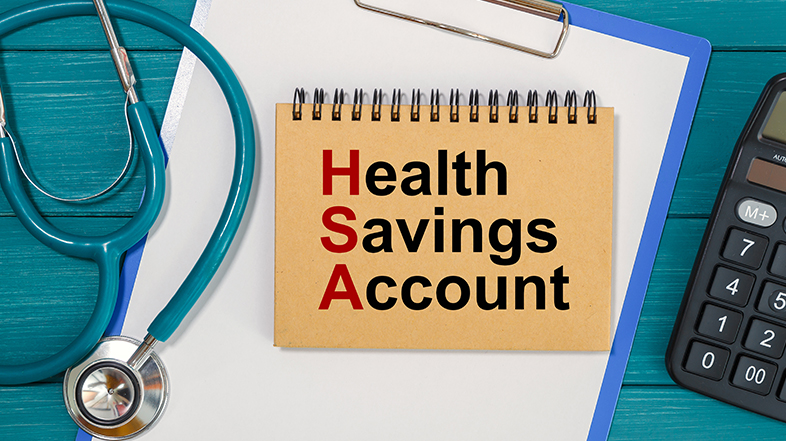
A Health Savings Account (HSA) offers a triple tax advantage: tax-deductible contributions, tax-free growth, and tax-free withdrawals for qualified medical expenses.
To be eligible, you must be enrolled in a high-deductible health plan (HDHP).
The HSA contribution limits for 2025 are $4,300 for self-only coverage and $8,550 for family coverage.
Those 55 and older who are not enrolled in Medicare can contribute an additional $1,000 as a catch-up contribution.
The deadline to contribute for the 2025 tax year is April 15, 2026, but making your contribution before year-end can help you maximize your tax savings sooner.[2]
#3 Use Your FSA Funds Before They Expire

Unlike HSAs, Flexible Spending Accounts (FSAs) have a “use-it-or-lose-it” rule, meaning you could forfeit any unused funds at the end of the year.
For 2025, the contribution limit limit is $3,300 per employer. If you’re married, your spouse can put up to $3,300 in an FSA with their employer as well.
While some employers offer a grace period of up to 2.5 months or allow a carryover of up to $660 into 2026, many do not.
Check with your employer to understand your plan’s rules and make sure to spend any remaining funds on eligible expenses before the deadline.[3]
#4 Make Charitable Donations before the Deadline

Year-end is a great time to support causes you care about while also potentially lowering your tax bill.
To be deductible for the 2025 tax year, charitable contributions must be made by December 31.
According to the IRS, you can generally deduct cash contributions up to 60% of your adjusted gross income (AGI), but you must itemize your deductions to claim them.
For contributions of cash, check, or other monetary gift (regardless of amount), you must maintain a record of the contribution. This includes a bank record or a written communication from the qualified organization containing the name of the organization, the amount, and the date of the contribution.
Be sure to donate to IRS-qualified 501(c)(3) organizations and keep records of your contributions.[4]
#5 Contribute to an IRA (Plan Ahead for April Deadline)

While the deadline for IRA contributions for the 2025 tax year is April 15, 2026, planning your contribution before year-end is a smart move.
For 2025, you can contribute up to $7,000 to an IRA, or $8,000 if you are age 50 or older.
For 2026, these limits increase to $7,500 and $8,600, respectively.[1]
#6 Take RMDs If You’re Age 73+

If you are age 73 or older, you are generally required to take required minimum distributions (RMDs) from your retirement accounts, such as traditional IRAs and 401(k)s, by December 31.
The RMD age is currently 73.
According to the IRS, “If you don’t take any distributions, or if the distributions are not large enough, you may have to pay a 25% excise tax on the amount not distributed as required (10% if withdrawn within 2 years).”[5]
#7 Harvest Tax Losses for 2025

Tax-loss harvesting is a strategy where you sell investments at a loss to offset capital gains and potentially reduce your taxable income.
According to the IRS, you can deduct up to $3,000 in capital losses against your ordinary income per year, and carry over any additional losses to future years.
The deadline for tax-loss harvesting is December 31.[6]
Be mindful of the “wash-sale” rule. The IRS put this in place to prevent people from claiming a loss if they buy the same or a “substantially identical” security within 30 days before or after the sale.[7]
#8 Allocate Your Year-End Bonus Wisely

A year-end bonus can be a great opportunity to accelerate your financial goals.
Instead of treating it as spending money, consider a strategic approach.
Allocate a portion to paying down high-interest debt, boosting your emergency fund, or saving more in your retirement accounts.
Since bonuses are often taxed at a higher withholding rate, contributing to a 401(k) or traditional IRA may also help reduce your taxable income.
#9 Update Beneficiaries (401k/IRA/Life Insurance)

Beneficiary designations on your retirement accounts and life insurance policies override your will, so it’s essential to keep them up to date.
Life events like marriage, divorce, or the birth of a child are all reasons to review your beneficiaries.
An annual review at year-end is a good practice to ensure your assets will be distributed according to your wishes.
#10 Revisit Automatic Savings Transfers

Automatic savings is a powerful tool for building wealth.
The “pay yourself first” strategy, where you automatically transfer money from your checking to your savings account each payday, can help you save more.
The end of the year is a perfect time to review your automatic transfers and consider increasing the amount, especially if you’ve received a raise or your expenses have changed.
#11 Review Your Budget and Create a New One for 2026

The end of the year is a great time to review your spending from the past year and create a new budget for the year ahead.
Analyze your bank and credit card statements to see where your money went and identify areas where you can cut back.
A popular budgeting method is the 50/30/20 rule, where 50% of your income goes to needs, 30% to wants, and 20% to savings.
#12 Seek Professional Help for Your Retirement Savings

As the end of the year approaches, it’s a good time to schedule a check-in with a retirement professional.
That’s where 401(k) Maneuver can help.
We provide professional 401(k) account management designed to help you grow and protect your 401(k) account.
Our goal is to increase your account performance over time, manage downside risk to minimize losses, and reduce fees that are hurting your retirement account performance.
When you enroll with 401(k) Maneuver, here’s what you can expect:
- Quarterly reviews and rebalancing personalized to your risk tolerance and the current market conditions.
- Email updates every time we review and adjust your account.
- Independent fiduciary advice focused entirely on your best interests.
- No in-person meetings required. Everything is handled online through our secure platform.
- Access to our online community, exclusive content, and a private Facebook group for professional insights.
Your 401(k) stays exactly where it is, and we manage it for you.
Key Takeaways
- Several major financial deadlines occur on December 31, including 401(k) contributions, charitable donations, RMDs, FSA spending, and tax-loss harvesting.
- Making HSA and IRA contributions early can help reduce taxes and strengthen long-term savings.
- Reviewing beneficiaries, automatic transfers, and budgets ensures your financial plan is aligned with your 2026 goals.
- A year-end bonus, if used strategically, can accelerate debt payoff, increase savings, or boost retirement contributions.
Sources
[1] Internal Revenue Service (IRS). “401(k) Limit Increases to $24,500 for 2026; IRA Limit Increases to $7,500.”
IRS News Release, Notice 2025-67, published November 13, 2025.
https://www.irs.gov/newsroom/401k-limit-increases-to-24500-for-2026-ira-limit-increases-to-7500
[2] Fidelity Investments. HSA Contribution Limits for 2025.
Fidelity Learning Center, 2025.
https://www.fidelity.com/learning-center/smart-money/hsa-contribution-limits
[3] HealthCare.gov. Flexible Spending Accounts (FSAs), 2025.
https://www.healthcare.gov/have-job-based-coverage/flexible-spending-accounts/
[4] Internal Revenue Service (IRS). Charitable Contribution Deductions, 2025.
https://www.irs.gov/charities-non-profits/charitable-organizations/charitable-contribution-deductions
[5] Internal Revenue Service (IRS). Required Minimum Distributions (RMDs), 2025. https://www.irs.gov/retirement-plans/plan-participant-employee/retirement-topics-required-minimum-distributions-rmds
[6] Internal Revenue Service (IRS). Topic No. 409 – Capital Gains and Losses, 2025.
https://www.irs.gov/taxtopics/tc409
[7] Investopedia. Wash-Sale Rule.
Updated 2025.
https://www.investopedia.com/terms/w/washsale.asp